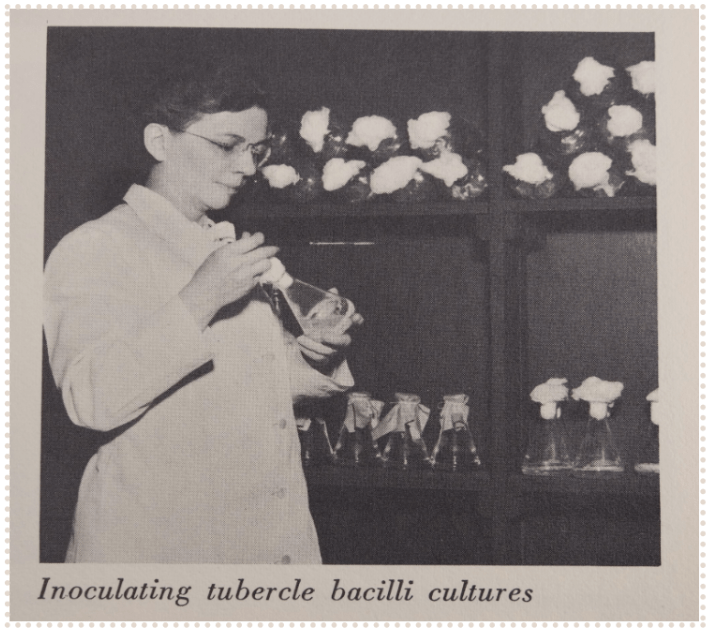
Florence Barbara Seibert was an American biochemist who helped shape the world by inventing the first reliable tuberculosis test and improving the safety of intravenous injections.
Florence Seibert was born in Easton, Pennsylvania where she then contracted a viral disease that affects the brain and spinal cord called polio. Due to this, she would suffer from a lifelong limp that as a child, left her turned away from running and playing outside like most kids her age. Since she couldn’t do the normal physical activities like other kids, she turned her attention to excelling in her studies and eventually spurred her interests in science, where she would then be awarded a scholarship to Goucher College and eventually earn a degree in chemistry in 1918. From there, she moved on to Yale University where she then completed a PhD in Biochemistry in 1923.
During this time, Florence Seibert began working on her graduate work with Lafayette Mendel, who also became an American biochemist. They both worked on a method of eliminating bacterial contamination which occurred during the process of using vaccinations and injections. Patients would experience sudden fevers or come in contact with an illness that would affect them just by treatment of both.
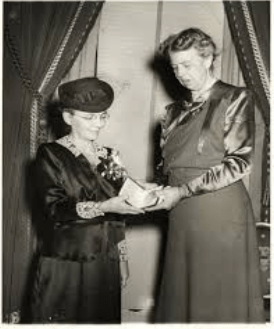
When in her own account, Seribert discovered that intravenous injections made with contaminated distilled water could cause fevers in patients, she invented a new distillian process that eliminated all bacteria. This not only would lead to administering drugs, but also would make surgery safer during the making of blood transfusions. During her life in 1932, she had decided to accept a position as assistant professor of biochemistry at the University of Pennsylvania’s Henry Phillips Institute where she would end up spending the rest of her career. While working in this position, Seibert would travel widely in a short span of time and get involved with institutions worldwide, one being the University of Uppsala in Sweden. Seibert would later collaborate with Theodor Svedberg, a Nobel Prize Winner for chemistry, who introduced Seibert to the later process of dispersing large molecules using a centrifuge.
In the mid–1930s, her work culminated with her developing a purified protein derivative, or PPD, that would eventually become the basic standard today of the TB test, or Tuberculosis test, which is a rare bacterial infection that targets the area of the lungs. In 1938, her work was recognized by the medical community and she was awarded the Trudeau Medal from the National Tuberculosis Association. Her test became a standard later in the United States, and a year later she was awarded by the American Chemical Society the Garvan Medal, and the first Achievement Award from the Association of University Women in 1943.

In addition to all her work, Seibert eventually devoted the rest of her time to other things and began working on a largely volunteer basis for 30 more years after retiring in 1959 from the Phillips institute. Continuing the rest of her focus to her research, she examined paths on the relationship between bacteria and types of cancer at the Mound Park Hospital and Research Center.
However, in 1991 at the age of 93, she had died of a disclosed death. Almost two years later, a historical marker was dedicated at the location of her birth. With her everlasting contributions to society, her work made testing for tuberculosis accurate, and drug therapy safer.
Works Cited
Amphilsoc.org. Accessed May 26, 2024.
https://www.amphilsoc.org/blog/florence-seibert-inventor-standard-tb-test
Wikipedia, the free encyclopedia. wikipedia.org.
Accessed May 26.2024.
https://en.wikipedia.org/wiki/Florence_B._Seibert
Lemels N-MIT. Accessed May 26, 2024.
https://lemelson.mit.edu/resources/florence-seibert
Florence Seibert: American scientist. britammica.com.
Accessed May 26.2024.
https://www.britannica.com/biography/Florence-Seibert
About the author:
Hello! My name is Savannah Knox, a rising freshman student enrolled at Upland High School who strives in focusing my education in STEM subjects. I am interested in STEM because of the creative paths from STEM education that women throughout the years have been able to accomplish from a gender dominated space.

 Her Stem Space
Leave a comment