

Margaret Floy Washburn (July 25, 1871 – October 29, 1939) was a distinguished American psychologist in the early twentieth century, well known for her experimental research on animal behaviour and motor theory development.
Her choice of profession allowed her to pursue something greater, even though it prohibited her from fulfilling her traditional obligations as a wife and mother. As an instance, she became the first woman to acquire a Ph.D. in psychology and serve as president of the American Psychological Association (after Mary Whiton Calkins). She dedicated her life embracing anything that piqued her interest: ideas, activities, people, and animals. As the first woman to receive a Ph.D. in psychology, she pioneered women’s engagement in the field, and her work at Vassar College established it as a premier institution in psychological study. Margaret’s views on the necessity of scientific research of internal mental functioning as well as external behaviour to fully comprehend human behaviour were revolutionary at the time.
EARLY LIFE AND CAREER
Margaret is known as a renowned psychologist who spent her life studying the study of the mind. She was born in Harlem and began attending school at the age of seven before moving to Kingston, New York. In 1886, she graduated from high school and enrolled at Vassar College as a chemistry and French preparation student.
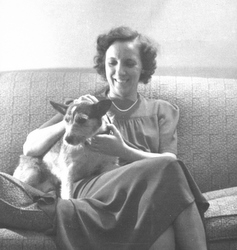
She developed an interest in experimental psychology while at Vassar and then studied under James McKeen Cattell at Columbia University. She later studied under Edward B. Titchener at Cornell University, where she received her master’s degree in 1893 and her dissertation thesis on the effect of visual imagery on judgements of tactual distance and direction. In 1894, she became the first woman to get a Ph.D. in psychology and was elected to the American Psychological Association.
Washburn taught at various universities, including Wells College, Cornell’s Sage College, and the University of Cincinnati. She returned to Vassar College as an associate professor of philosophy in 1903 and established a new department of psychology in 1908. Her return marked a significant point in her career, as she was included in Cattell’s list of 1000 most important “men of science” and was appointed as a cooperating editor of the American Journal of Psychology. Under her leadership, an independent department of psychology was formed at Vassar, of which she was appointed Professor. She remained at Vassar until her retirement as Emeritus Professor of Psychology in June 1937.
In 1937, she suffered a massive stroke, forcing her to resign as emeritus professor of psychology. She died on October 29, 1939, in Poughkeepsie, New York, having never fully recovered.
She was a key pioneer in American psychology, helping to shape the field as both a science and a scholarly profession. Washburn was a well-liked professor, known for her contributions in theory development, experimental work, animal behaviour, and professional service. She published over 200 scientific articles and reviews, translated Wundt’s Ethical Systems, and wrote two books: The Animal Mind and Movement and Mental Imagery. Between 1905 and 1938, she published sixty-eight studies from the Vassar Psychological Laboratory.

HER CONTRIBUTIONS IN PSYCHOLOGY
,,Nothing in the world is so compelling to the emotions as the mind of another human being”– Margaret Floy Washburn
She aimed to prove that mental events could be as legitimate and worthy of study as other behavioural events, challenging popular views at the time. Washburn gathered research from various psychological schools of thought, including behaviourism, structuralism, functionalism, and Gestalt psychology. She was sceptical about psychoanalytic and psychodynamic psychology but considered ideas from behaviourism, structuralism, functionalism, and Gestalt psychology.
Margaret’s work, Movement and Mental Imagery, influenced recent approaches to understanding development and cognition, known as the Dynamic Systems Approach. She published approximately 127 articles over 35 years, covering topics such as memory, spatial perception, experimental aesthetics, animal psychology, individual differences, emotion, and affective experiences. She served as editor for journals like the American Journal of Psychology, Psychological Review, Psychological Bulletin, Journal of Animal Behavior, and Journal of Comparative Psychology, evaluating and publishing others’ findings.
Another significant contribution from Washburn was her attempt to link structuralist and behaviourist traditions. She developed a motor theory stating that thought or consciousness could be seen in bodily movements, aiming to explain the human ability to learn through association. Washburn’s legacy includes her book, The Animal Mind: A Textbook of Comparative Psychology, published in 1908, which was used as the standard textbook for comparative psychology for 25 years. She studied various types of animals, including insects, clams, frogs, jellyfish, shellfish, sea anemones, and other mammals, and studied higher mental processes such as consciousness.
MOTOR THEORY
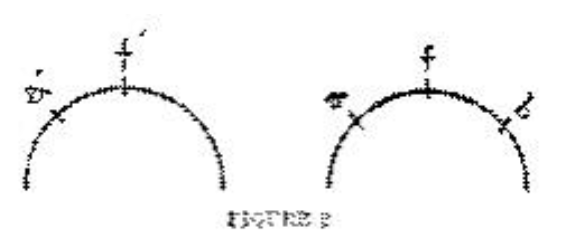
DEFINITION: Motor Theory of Consciousness suggests that consciousness and thinking are evidenced by and based on bodily movements.
Washburn presented a motor psychology hypothesis in which emotions paralyse and enhance thought depending on when and why. The idea posits that awareness occurs and is not an aspect of movement, but rather has specific motor activities as its essential foundation. The motor accompaniment of thought, as opposed to feeling, consists of minor, incipient, or tentative muscle contractions that can be organised into systems such as simultaneous or sequential motions, continuous tonic muscular contractions, or actual change of posture.
The term “thought” can be used in two distinct contexts: reverie or undirected thinking and thinking aimed towards an issue or intent. In the former instance, every notion suggests the one that comes after it, but its effect fades and our thoughts wander. In the latter situation, a long chain of ideas is guided by the concept of an aim, problem, or purpose, while extraneous wandering thoughts are suppressed.
The motor theory under examination bases all thinking on the occurrence of tentative movements, while directed thinking is based on the occurrence of a persistent motor innervation known as the activity attitude. Anything that interferes with tentative motions will stifle all thinking, while anything that clashes with the activity attitude will prevent focused thought. The tentative motions that underpin thinking are primarily those of the smaller and more delicate muscles of the body, such as the eyes, fingers, and speech muscles.
Emotion arises in conditions that are critical to the organism, such as fleeing, combat, or mating situations. In such a setting, the possibilities of response can be split into three categories: adaptive movements of the striped muscles, non-adaptive movements of the striped muscles, and internal alterations caused by the sympathetic and glandular systems.
One motor activity can interfere with another only if the two motions or attitudes cannot occur simultaneously. The motor theory goes on to claim that when one neurological function inhibits another, it must be because the two are associated with incompatible movements. Furthermore, when two movement systems are stimulated at the same time, if one involves a movement that is incompatible with another, the systems cannot be executed concurrently and tend to inhibit each other. Dissociation can be attributed to the operation of such tiny movement systems, and hysterics have a proclivity for it.
Her motor theory of consciousness arose a lot of discussions among other psychologists (Margaret F. Washburn: Emotion and Thought: A Motor Theory of Their Relations with Discussion by Knight Dunlap, James Melrose and Morton Prince.):
,, Dr. Washburn’s paper has given rise to some emotions in me, which I hope will not interfere with my thinking. Before I take up the main point that I want to inflict on you in connection with this paper, I would like to say that I wish that Dr. Washburn’s optimistic statement were true. I am afraid it is not. She said, “People cannot keep on trying to think about topics of which they have no knowledge.” Would God that were true! I don’t know what would happen to much of our psychology if it were true.” (Dr. Dunlap; Johns Hopkins University)
,, Some facts occurred to me during the reading of the paper, and I wonder if Dr. Washburn will inform me about them and reconcile them with the motor theory of thought.”
(Dr. Prince; Harvard University)
Works Cited
Margaret Floy Washburn – New World Encyclopedia. www.newworldencyclopedia.org/entry/Margaret_Floy_Washburn.
Margaret Floy Washburn. faculty.webster.edu/woolflm/washburn.html.
What Did Margaret Floy Washburn Contribute To Psychology? | BetterHelp. 1 July 2024, www.betterhelp.com/advice/psychologists/what-did-margaret-floy-washburn-contribute-to-psychology/#.
Margaret F. Washburn: Emotion and Thought: A Motor Theory of Their Relations with Discussion by Knight Dunlap, James Melrose and Morton Prince. brocku.ca/MeadProject/Washburn/Washburn_1928.html.
“Margaret Floy Washburn, PhD.” https://www.apa.org,
www.apa.org/about/governance/president/bio-margaret-washburn.“Margaret Floy Washburn: Contribution and Quotes | StudySmarter.” StudySmarter UK, www.studysmarter.co.uk/explanations/psychology/famous-psychologists/margaret-floy-washburn/#:~:text=A%20 famous%20 Margaret%20flow%20 Washburn,606).
About the Author

My name is Isidora, and I am a rising sophomore in high school. My interest in STEM is mainly because of my fascination with abnormal psychology and psychoanalysis!

 Her Stem Space
Leave a comment