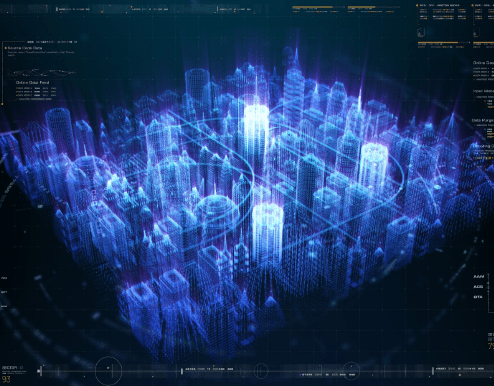
It first became relevant in the period after WWII as a tool for meteorology and nuclear physics, yet today it is used in a number of fields including: medicine, astrophysics, fluid mechanics, evolutionary biology, ecology and several others including non-STEM subjects such as economics. Computer simulation.
What is computer simulation? Computer simulations are when a computer program runs step-by-step methods in a model (duplicate) of a real-world system to predict and explore the behaviour and outcomes of that situation; as the name suggests it is done with the aid of a computer program. The model can also be of hypothetical scenarios.
How do the models work? First, data must be collected of records of how the real-world system works, such as temperature, humidity, average rainfall of an environment. Then, these variables will be passed through different mathematical operations that give different outputs, which are controlled by the program. There are different types of models that are used in different situations. You have discrete models, which are when changes occur at specific points in time within the simulation, continuous models, which are when changes can occur at any point in time within the simulation, and mixed models—which have the elements of both discrete and continuous models.

Computer simulation has aided in better understanding and testing experiments without the implied risks. For example, testing of nuclear fission and fusion without the threat of the scientists being exposed to radiation; similarly in the car industry, it also helps spare resources as they can crash thousands of cars in the computer model while sparring the physical prototypes. It is most notably used in researching black holes, natural disasters and cancer treatments, and more humorously, a simulation was run in the university of Chicago on a potential zombie apocalypse! It was found that the entirety of Chicago could be taken over in 60 days. The same computer is also used to test more realistic scenarios, such as outbreaks of ebola, the Zika virus, MRSA and more.
Mary Tsingou Menzel is a pioneer in the field, as in 1952, she programmed and ran in the MANIAC supercomputer, located in the Los Alamos Scientific Laboratory, the FPUT problem. It was previously known as the FPU problem as the ones to author the report were the three male scientists who theorised and designed the experiment, even though she was acknowledged in the paper as the programmer. It was only recently that she got truly recognized for her work. This experiment was the first one to allow the observation of the interactions between atoms.
Works Cited
Computer Simulations in Science (Stanford Encyclopedia of Philosophy)
https://plato.stanford.edu/Entries/simulations-science/#NarDef
Mike Thomas, Jessica Powers. Computer simulations: Definitions, Examples, Uses
https://builtin.com/hardware/computer-simulation
Virginia Grant. Unsung Female Pioneer of Computer Simulation
https://www.scientificamerican.com/article/an-unsung-female-pioneer-of-computer-simulation/
Rob Mitchum. Zombie-based Modelling
Joe Paul. What is a computer model?
https://theodi.org/insights/explainers/what-is-a-computer-model/
National Institute of Health. Computer modelling and simulation
About the Author
Hi, my name is Viviane. I am currently in 10th grade. I’m 16 years old. I have always been interested in sciences from chemistry, medicine and more. Computer science has been something that in recent years I’ve become even more passionate about and I hope I can share that passion with this article and more!


 Her Stem Space
Leave a comment