Since more developments are being made in the studies of modern genetics, people should become more aware of the individuals who were responsible for building the groundwork for scientists’ knowledge today. In the advancement of the field, one of the less acknowledged female contributors was an American geneticist named Nettie Stevens. An early 1900s scientific breakthrough was made by her, which changed perspectives that scientists had at the time about sex determination. More specifically, her research was crucial for beginning an understanding of the roles of chromosomes in sex determination and has been referenced for future advancements in genetics.
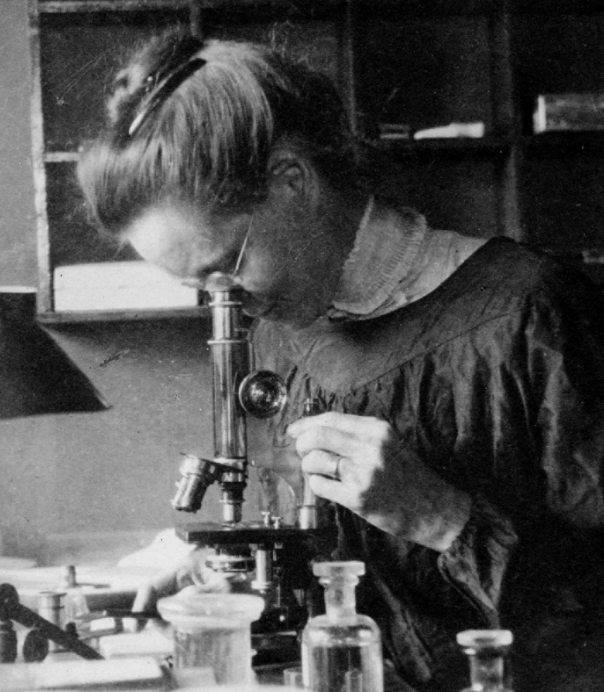
Early Life & Education:
Nettie Stevens was born on July 7, 1861, in Vermont. She was born into a middle-class family that had been living in England for five generations. At that time, it was uncommon for women to pursue careers in science, and most women chose careers in teaching or nursing. Some women were also more interested in marrying and starting a family. It was clear to see that Nettie did not desire a path like most women at her time and was committed to having a career in science. Luckily enough, Nettie was fortunate enough to attend Westford Academy, a school for both men and women, until she graduated at age 19 and became a teacher. Nettie had disliked being a teacher, as she knew her heart belonged in the scientific field, however, she was recalled of being a warm-hearted teacher who always put her students’ needs before her own. When she had saved up enough money, she attended a teachers’ school, the State Normal College, now known as Westfield State College, from 1881 up until 1883. Throughout her academic career, Nettie was always at the top of her class and was an incredibly bright student. Nettie decided she wanted to attend college, and after working for and saving up enough money, she attended Leland Stanford University, where she earned a B.A. degree in 1899, and an masters degree in biology a year later. She earned her Ph. D. in 1903, an incredible achievement for any woman pursuing a scientific career at that time. Even before she had officially received her degree, she had already published over six papers. Nettie then wanted to attend graduate school, where she did so at Bryn Mawr College, where she studied biology. Throughout her time studying there, she did research in Italy as well as Germany.

Contributions:
Nettie’s career had a late start; however, she still accomplished many things throughout her limited time. Interested in areas like structure and classification, Nettie’s primary studies first focused solely on small organisms and cells. Her first paper, published in 1901, was about the morphology and taxonomy of ciliate protozoa, and her paper focused on describing the organisms and classifying them based on their physical characteristics. However, after doing some work in that field, Nettie turned to cytology in which she published another paper in that field in 1904 with another geneticist, Thomas Hunt Morgan, who won a Nobel prize for his work in 1933.
Discovering X and Y Chromosomes:
She then continued her studies in cell regeneration, which led her to research how embryos were developed and how chromosomes function. She completed her research in her assistantship, which was given to her by the Carnegie Institute after being recommended by her former professor, Thomas Hunt Morgan, and Edmund Wilson. In 1905, her research that she completed in her position had finally paid off and she published a ground-breaking paper showing that the X and Y chromosomes determine an individual’s sex. She had come across this while observing mealworms and found out that males have reproductive cells with both X and Y, while females have only X. This incredible discovery had, at last, put a stop to the continued debate as to whether the sex of a person was determined by inherited characteristics or environmental factors at the time when the embryo was being formed. This discovery also was the first time that a specific gene was directly associated with a given chromosome. However, even scientists of that time did not hurry to recognize Nettie’s discoveries. At first, her discoveries were not appreciated because of the gender bias that existed in the scientific field at that time; however, her groundbreaking work eventually gained recognition and inspired scientists to explore and expand upon her findings. Another researcher, Edmund Wilson, made similar discoveries around the same time, but Nettie’s work made bigger advances in science and turned out to be correct. Many authors had unfairly given Wilson the credit for the discovery alone. Ultimately, Thomas Hunt Morgan is commonly recognized for discovering sex chromosomes, despite initially being against the discoveries of Edmund and Nettie. His praise also heightened due to his research on sex-linked traits in fruit flies and his Nobel Prize in 1933. Even though Edmund and Thomas had received their credit and praise for the discovery, Nettie was not given any. For example, while Thomas and Edmund were invited to present their theories at a conference in 1906, Nettie was not invited.
In conclusion, throughout Nettie’s life, she broke many gender barriers in science and made one giant step that has brought improvements in understanding and explaining sex determination. She is still a source of inspiration to the current genetic researchers as well as all the females who would like to establish themselves in STEM careers despite any obstacles that come their way.
Works Cited
Britannica, The Editors of Encyclopedia. “Nettie Stevens”. Encyclopedia Britannica, 3 Jul. 2024, https://www.britannica.com/biography/Nettie-Stevens. Accessed 8 August 2024.
“Nettie Stevens: A Discoverer of Sex Chromosomes.” Scitable, © 2014 Nature Education, http://www.nature.com/scitable/topicpage/nettie-stevens-a-discoverer-of-sex-chromosomes-6580266/. Accessed 8 Aug. 2024.
“Nettie Stevens Biography.” Carnegie Science, © Copyright Carnegie Science 2024, 1 Mar. 2024, carnegiescience.edu/news/nettie-stevens-biography. Accessed 9 Aug. 2024.
Carey, Sarah B., et al. “The contributions of Nettie Stevens to the field of sex chromosome biology.” The Royal Society, © 2024 The Royal Society, 21 Mar. 2022, royalsocietypublishing.org/doi/10.1098/rstb.2021.0215. Accessed 8 Aug. 2024.
“Nettie Maria Stevens.” Linda Hall Library, ©2024, Linda Hall Library, 7 July 2022, http://www.lindahall.org/about/news/scientist-of-the-day/nettie-maria-stevens/. Accessed 9 Aug. 2024.
About the Author

Hello! My name is Ariana, and I am an incoming freshman at East High School. I’m passionate about STEM and love learning how things work, especially in psychology and biology.

 Her Stem Space
Leave a comment