“Working with this virus is like putting your hand in a treasure chest. Every time you put your hand in, you pull out a gem.”
EARLY LIFE:
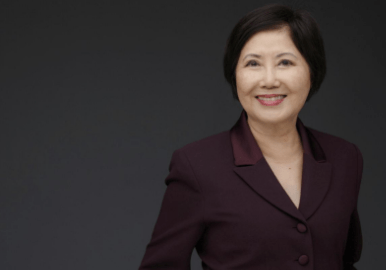
Born on August 27th, 1945 in Guangzhou, China as Yee Ching Wong, she fled to Hong Kong at the age of 7 with her family of six (consisting of four total children) due to the Communist Revolution in the late 1940s that shook the country and affected the lives of many other Chinese citizens. From an early age, especially when she attended the Maryknoll Covenant School, she excelled academically, specifically in science. Wong-Staal’s family, not having any women who outshone in the science field, were incredibly supportive of her journey. Her teachers, also supportive of her studies, encouraged her to continue her studies in the United States where she would eventually move to California in 1963. Also, at age 18, she and her father westernized her name to “Flossie,” named after a typhoon that struck southern China.
EDUCATION:
Eclipsing in the science field and being influenced by the American TV shows on the West Coast of the USA, she attended the University of California, Los Angeles (UCLA) where she would pursue her studies in bacteriology and molecular biology where she would eventually gain her Bachelor of Science degree. Wong-Staal in just three years would graduate as cum-laude and would go on to earn her Ph.D. in molecular biology in 1972. Wong-Staal would then move to San Diego to conduct her postdoctoral research at the University of San Diego.
POST-EDUCATION / EARLY WORK:
Continuing her postdoctoral research, Wong-Staal would then move to the east coast in Bethesda, Maryland where she would work in the Laboratory of Tumor Cell Biology in the National Cancer Institute of the National Institute of Health (NIH) in the 1970s. During this time, she co-authored more than 100 journal articles on AIDS and certain leukemias that affect the human species. Molecular biology specifically interested her as it allowed the development of new techniques in the biology field such as cloning and studying genes in detail. She would conduct research into oncogenes, genes associated with different cancers.

WONG-STAAL’S EXCEPTIONAL CAREER:
In the late 1970s, her team conducted research on the human T-cell Leukemia virus (also known as HTLV) where they studied the molecular biology of HTLV-1 and examined its activators and regulators leading to discoveries that would advance the studies of human retroviruses. Wong-Staal’s career circulated the research of HIV/AIDS where she was one of the individuals in the group of NIH researchers who acknowledged and proved HIV to be the cause of AIDS. Their studies and findings were published in the seminal paper, Science in 1983.
In 1990, Flossie Wong-Staal would step down from her position working in the NIH to UCSD where she would start the Center of AIDS Research where her research on AIDS would continue. She would then be declared as the director of this newly-made center in 1994. In this time of her inquiry, she would focus on gene therapy, where she used ribozymes to repress HIV in stem cells. Her team of researchers would also study the effects of Tat protein within HIV-1. All of these contributions would shape the development of effective antiviral therapies that would take place to manage AIDS in the world. Her work would also inspire other disease-inspired scientists in the 1980s and 1990s to join the field of retrovirology and to research more about HIV/AIDS. Using her experience in exploring HIV/AIDS, she went on to research hepatitis C and became the chief officer of the biotechnology firm, Immusol which developed drugs and medication to combat the disease. In 2002, she retired from UCSD and went on to conduct direct research at other local biotech companies focusing on combating HIV and HCV while also mentoring younger scientists who were inspired by Wong-Staal’s work.
ACHIEVEMENTS AND LEGACY:
While being successful in her examinations in molecular biology, biotechnology, and gene research, Dr. Wong-Staal gained a massive amount of deserved recognition for her work. These include numerous honors, awards, and membership opportunities in the U.S. National Academy of Medicine and the Academia Sinica of Taiwan. She was also recognized in the Discover Magazine in 2002 where she was placed as one of the top 50 female scientists. She was also placed as #32 in the Daily Telegraph in 2007. Most prominently in 2019, she was inducted into the National Women’s Hall of Fame.
Wong-Staal would then pass away at the age of 73 on July 8th, 2020 due to complications caused by pneumonia. Though she passed, she is remembered for her brilliance and perseverance as a researcher. She has made numerous contributions and advancements in immunology and virology where her ideas are applied to modern medicine and diseases, such as COVID-19. Thank you, Dr. Flossie Wong-Staal for your work as a woman in STEM!
Works Cited
“Flossie Wong-Staal.” Wikipedia, https://en.wikipedia.org/wiki/Flossie_Wong-Staal.
Franchini, Genoveffa. “Flossie Wong-Staal (1946–2020).” Science, vol. 369, no. 6509, 10 Sept. 2020, pp. 1308–1308, https://doi.org/10.1126/science.abe4095.
Kenyon, Georgina. “Flossie Wong-Staal.” The Lancet Infectious Diseases, vol. 20, no. 9, Sept. 2020, p. 1022, https://doi.org/10.1016/s1473-3099(20)30645-9.
“In Memoriam: Flossie Wong-Staal, Ph.D. | Center for Cancer Research.” Center for Cancer Research, 13 July 2020, https://ccr.cancer.gov/news/article/in-memoriam-flossie-wong-staal-phd.
“Wong-Staal, Flossie.” National Women’s Hall of Fame, https://www.womenofthehall.org/inductee/flossie-wongstaal/.
About the Author

Hello! My name is MJ Magallones and I am a Junior from Washington. I am interested in STEM because of my love for science, math (I love problem-solving!), and my interest in medicine. In the future, I aspire to be a pediatrician one day. I believe that women in STEM are important as they express diversity, representation, and the strength that women have in an industry that has been male-dominated for decades. Thank you for reading my article!

 Her Stem Space
Leave a comment