

Rachel Carson, a revolutionary environmentalist and writer, remains an influential figure whose work profoundly influenced the modern environmental movement. She was born on May 27, 1907, in Springdale, Pennsylvania, to Robert and Maria McLean Carson. Her deep appreciation for nature was nurtured early on by her mother, and her talent as a writer blossomed remarkably early in life. By the age of 10, Carson had already achieved the milestone of becoming a published author in children’s magazines. She attended the Pennsylvania College of Women, now known as Chatham University, graduating with great praise in 1929. She then continued her studies at the Oceanographic Institute in Woods Hole, and at Johns Hopkins University, where she earned a master’s degree in Zoology in 1932.
After achieving the highest score among all the candidates on the civil service exam, Carson was hired by the US Bureau of Fisheries in 1936, becoming the second woman to join the organization. Over the next 15 years, she wrote brochures and other public materials. Her dedication and skill led to her advancement to the Editor-in-Chief of all publications for the US Fish and Wildlife Service.

Book Award
In the intervening period, she then wrote books about aquatic life like The Sea Around Us (1951) and Under the Sea Wind (1941). The New Yorker serialized the latter, which sold well all over the world. She was honored as the winner of a Guggenheim award, a national science writing prize, and a National Book Award. In 1953, she moved to Southport Island, Maine, to zero in on her writing thanks to the book’s sales. She released another best-seller, The Edge of the Sea, in 1955. She also began dating an already engaged summer resident named Dorothy Freeman. The majority of Rachel Carson and Dorothy Freeman’s letters were ignited soon before Carson passed away, but the remainder were published in 1995 as Always, Rachel: The Letters of Rachel Carson and Dorothy Freeman, 1952–1964: An Intimate Portrait of a Remarkable Friendship by Freeman’s granddaughter.
Sadly after her niece passed away in 1957, she relocated to Silver Springs, Maryland to take care of her mother and adopted her niece’s son. Carson was inspired to write “Silent Spring” by a friend’s letter from Duxbury, Massachusetts, which described the decline in bird life after pesticide spraying. Four chapters especially discuss the impacts of pesticides on humans, including the risk of cancer, even though the majority of the book looks at how they affect ecosystems. She further charged that public officials were blindly adopting industry statements and that the chemical industry was disseminating false information.
Chemical organizations tried to paint Carson as a crazy woman or a communist in an effort to undermine her reputation. A lot of them even pulled their ads from the April 3rd, 1963, CBS Reports TV special “The Silent Spring of Rachel Carson.” Even then, the show drew in about 15 million spectators. Pesticides garnered more national awareness after President John F. Kennedy’s Science Advisory Committee validated Dr. Rachel Carson’s study. Because of her efforts, Carson was inducted into the American Academy of Arts and Letters and received medals from the American Geographical Society and the National Audubon Society.
In 1980, she was posthumously awarded the Presidential Medal of Freedom.
She was laid to rest in 1964 after vigorously battling breast cancer. Her homes are considered national historic landmarks, and various awards bear her name.
Works Cited
Michals, Debra. “Rachel Carson.” National Women’s History Museum, National Women’s History Museum, 2015. www.womenshistory.org/education-resources/biographies/rachel-carson.
Lear, Linda. “Rachel Carson, the Life and Legacy.” Rachelcarson.org, 2019, www.rachelcarson.org/.
U.S. Fish & Wildlife Service. “Rachel Carson (1907-1964) Author of the Modern Environmental Movement, , U.S. Fish and Wildlife Service.” FWS.gov, www.fws.gov/staff-profile/rachel-carson-1907-1964-author-modern-environmental-movement.
Tikkanen, Amy. “Rachel Carson | American Biologist.” Encyclopædia Britannica, 25 May 2018, www.britannica.com/biography/Rachel-Carson.
About the Author
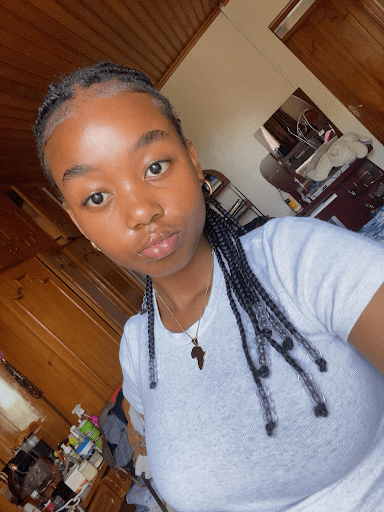
Hello! My name is Elisa Ana, and I am a dedicated student with a deep passion for biology and chemistry. Aspiring to become a neurosurgeon, I am currently in grade 10 in light international school and working hard to achieve my dream of attending Harvard Medical School. My love for science drives me to excel in my studies and prepare for a future in medicine.

 Her Stem Space
Leave a comment