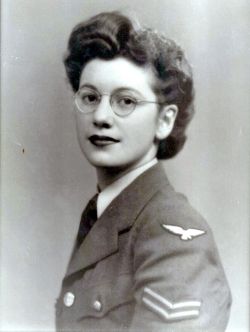
In the 1900s, an intelligent future mathematician and cryptanalyst was born in England, known as Joan Clarke. She is known for her revolutionary contributions to the allied forces during WWII as well as one of the team members known for cracking the Enigma code at Bletchley Park. An expert on British intelligence did recognize this work to be responsible for disrupting the harm done by German U-Boats, and thus putting it to an end and further restoring food security in the United Kingdom.
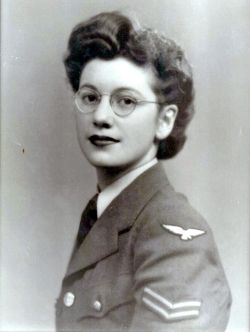
According to Female Innovators Who Changed Our World, Clarke was born on June 24, 1917, and “attended Dulwich High School for Girls” (Shimizu, 1). During her time at Newnham College in Cambridge, she excelled tremendously, “earning the title of ‘Wrangler’” (Shimizu, 1). Joan became the highest-scoring student in her course but did not receive any sort of official qualification, as the University of Cambridge did not allow women to be awarded degrees. However, she continued her work as she eventually became one the many brilliant minds to work on decoding German methods after the second World War broke out, despite her being a woman. Furthermore, Clarke interviewed for a position at the “UK Government Code and Cypher School (GC&CS) by her former geometry supervisor Gordan Welchman” (Shimizu, 1).
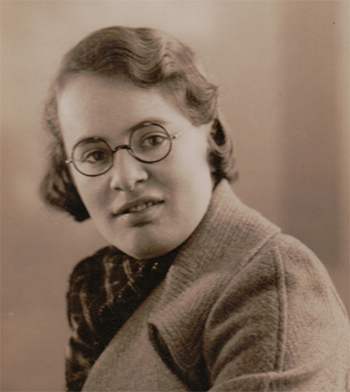
After settling into her new role, Joan was acquainted with a machine known as the bombe- “a machine that aided the deciphering of messages encrypted by the Nazi’s Enigma machine” (Shimizu, 1). Clarke worked alongside Alan Turing who previously developed this machine, which she would later use to decode the complex messages sent by the German.
The machine itself “would rattle through different combinations of starting position and plugboard connections based on a ‘menu’ of rotor orders, looking for contradictions” (Shimizu, 2). As time went on, Joan became increasingly knowledgeable about the device, leading to her discoveries to increase efficiency and speed up the decoding process. Clarke gradually gained more and more responsibility, as she “was trusted to work the night shift alone” (Shimizu, 2). Although, she did not earn the privilege of earning equivalent salary to that of other male employees in her field.
Toward the end of Joan Clarke’s story, she later became married to her husband, “Lieutenant Colonel John Kenneth Ronald Murray” (Shimizu, 3). After her husband’s passing, Joan worked until her retirement in 1977, thereafter passing away at age 79, “in her house in Headington, where an Oxfordshire Blue Plaque has been displayed since 2019 as a reminder of this talented woman who so enthusiastically gave her brilliant mind to help her country” (Shimizu, 3). Joan Clarke, an esteemed female mathematician with a gifted mind, used her talents to change our world, and the world of STEM.
Works Cited
“History of Scientific Women.” Joan CLARKE,
scientificwomen.net/women/clarke-joan-158. Accessed 4 June 2024.
Joan Clarke – Cryptanalyst and Numismatist Deutsche Bank,
Shimizu, Emma. Female Innovators Who Changed Our World. Pen and Sword History,
30 Apr. 2022. https://www.pen-and-sword.co.uk/Female-Innovators-Who-Changed-Our-WorldHardback/p/20518
About the Author

Hi! I’m Shyann, and I am an upcoming senior, an artist, and really passionate about pursuing a career in psychiatry. I want to inspire and encourage others to engage in STEM!

 Her Stem Space
Leave a comment