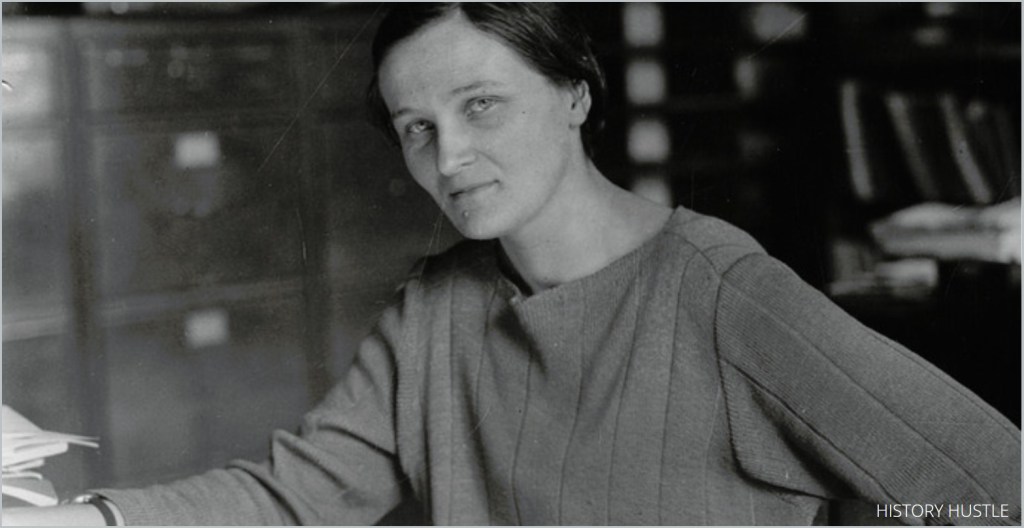
“There is nothing personal in the thunderclap of understanding. The lightning that releases it comes from outside oneself.” -Cecilia Payne-Gaposchkin
Cecilia Payne-Gaposchkin was a British-American astronomer and astrophysicist. She not only fought for change against sexual discrimination against women in the workforce and in STEM, but she also influenced the field of science with her discoveries.
Additionally, Payne was the first to reveal that hydrogen and helium were two of the most common elements of the universe using the laws of atomic physics.
As a young child, Payne’s mother recognized her daughter’s love and gift for science. She enrolled her in St. Paul’s School for Girls where Payne was able to thrive in the world of science and at 19 years old, Payne attended the University of Cambridge on a scholarship where she studied botany, physics, and chemistry. However, at the time, the college did not offer degrees to women. At Cambridge, Arthur Eddington, a professor of astronomy, inspired Payne to pursue a career in astronomy. In 1923, Payne received a fellowship to study under Harlow Shapley at the Harvard College Observatory in Massachusetts.
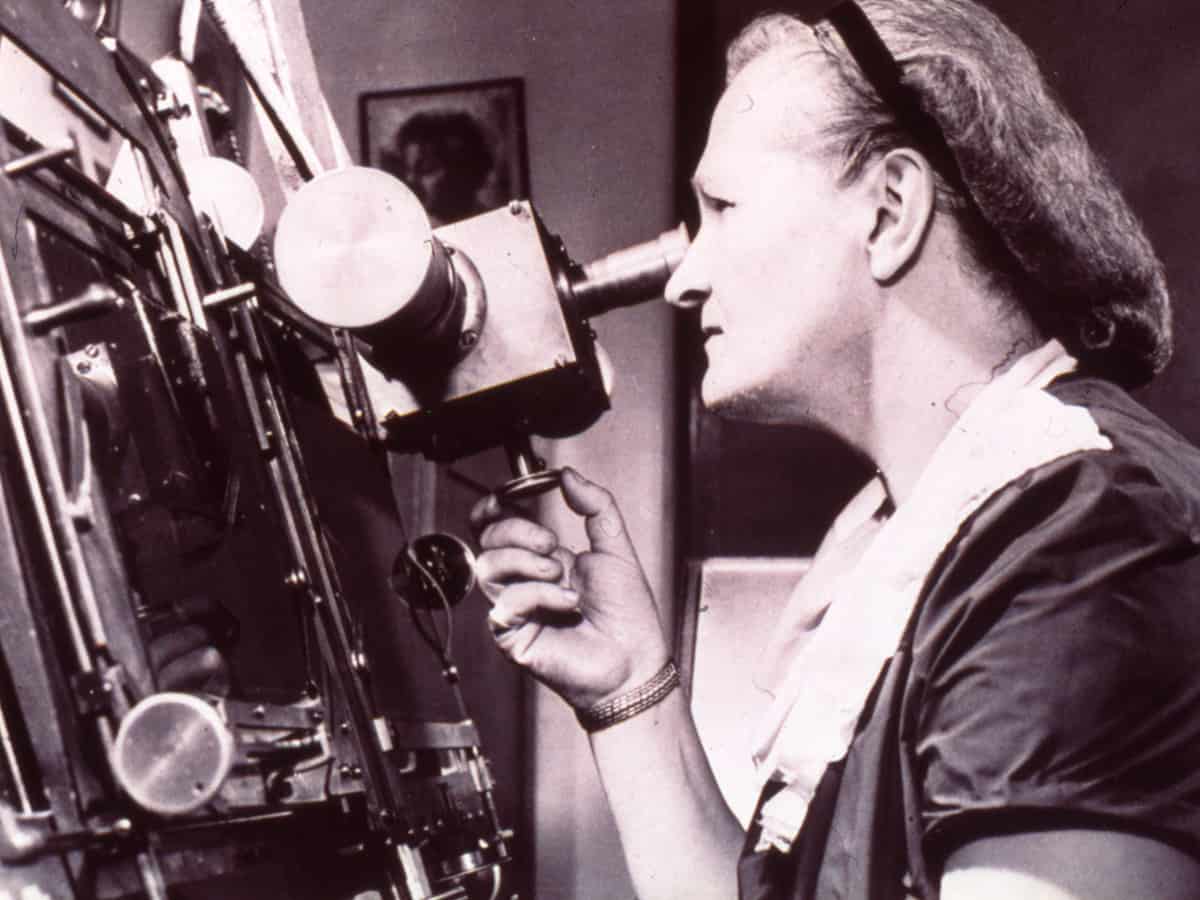
When Payne arrived at Harvard, she started her studies by applying the new physics she had been learning about to a collection of photographs of spectra where she discovered that there was a thousand times more hydrogen than iron and that the stars were made of mostly hydrogen and helium.
In 1925, she published this revolutionary discovery in her PhD thesis, Stellar Atmospheres. Shapley sent Payne’s thesis to Professor Russell at Princeton who claimed that it was impossible because he believed that the stars would have a similar composition to the Earth. Eventually, it became clear to Russell and many other astronomers that Payne’s conclusion was indeed correct and Payne had successfully shown how to read the surface temperature of any star from its spectrum.
Payne was the first person to earn a PhD in astronomy from Radcliffe University, which is now a part of Harvard. After finishing her PhD, Payne continued to perform all the regular duties of a professor such as lecturing and conducting research. However, because she was a woman her only title was “technical assistant.” Although she was one of the most brilliant and creative astronomers, she continued to be overlooked by the National Academy of Sciences. The tides of recognition began to shift when, in 1956, Payne was appointed as a full professor at Harvard and became the head of the astronomy department. She was the first woman to be recognized as such at Harvard University. 10 years later, she retired and in 1976, Payne was awarded the Henry Norris Russell Prize by the American Astronomical Society.
Payne was a transitional figure between old and new opportunities for women in the field of science. Additionally, her groundbreaking observations about stellar atmospheres and variable stars laid the foundations for future work by other scientists.
Works Cited
“Cecilia Payne: Discoverer of the Chemical Makeup of Stars: AMNH.” American Museum of Natural History, http://www.amnh.org/learn-teach/curriculum-collections/cosmic-horizons-book/cecilia-payne-profile. Accessed 27 May 2024.
Gregersen, Erik. “Cecilia Payne-Gaposchkin.” Encyclopædia Britannica, Encyclopædia Britannica, inc., 9 May 2024, http://www.britannica.com/biography/Cecilia-Payne-Gaposchkin.
Pasachoff, Jay M. “What Stars Are Made Of: The Life of Cecilia Payne-Gaposchkin.” The Key Reporter, 18 Feb. 2021, http://www.keyreporter.org/book-reviews/2020/what-stars-are-made-of-the-life-of-cecilia-payne-gaposchkin/.
Perkowitz, Sidney. “Cecilia Payne-Gaposchkin: The Woman Who Found Hydrogen in the Stars.” Physics World, 2 June 2023, physicsworld.com/a/cecilia-payne-gaposchkin-the-woman-who-found-hydrogen-in-the-stars/.
About the Author

Hi! My name is Diana Baidoo and I am a rising college freshman in Georgia. I’m interested in STEM not only because it encourages me to think creatively and outside the box, but also because of the meaningful impact that STEM has on society.

 Her Stem Space
Leave a comment