Imagine this: Your country stands on the verge of war with the most powerful nation in the world. Each day, you dedicate yourself to working alongside your fellow citizens in hopes of averting disaster. But instead of unity, you’re met with suspicion—not because of where you’re from, but because of who you are. To your colleagues, the real enemy isn’t the country thousands of kilometers away. It’s you.
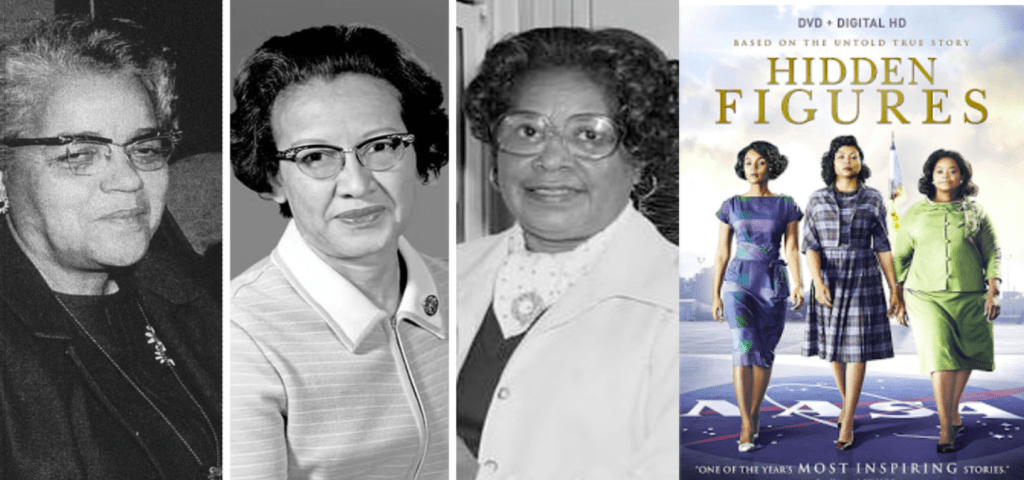
This was the daily reality of Katherine Goble Johnson, Dorothy Vaughan, and Mary Jackson – three African-American women who worked at the National Committee for Aeronautics (NACA), now known as the National Aeronautics and Space Administration (NASA), during the intense space race between the United States and the Soviet Union in the mid-1900s.
Even with their groundbreaking contributions to the advancement of American space exploration, these women were villainized, ostracized, and marginalized simply because of who they were: black women in a sea of white men.
Katherine Goble Johnson

Ever since she was born, everyone knew there was something special about Katherine Goble Johnson. Her knack for all things numbers was apparent even during her formative years – which was made evident by her starting high school at only 10-years-old. At 18, Johnson graduated with highest honors from West Virginia State College (now West Virginia State University), earning a bachelors degrees in Mathematics and French. In 1939, Johnson was selected as one of the first three African-American students to enroll in a graduate program at West Virginia State University.
In 1953, Johnson began working at NACA’s West Area Computing Unit: a group of African American women who manually performed complex mathematical calculations for the program’s engineers. Known as the West Computers, these women analyzed test data and provided mathematical computations that were critical to the success of the early U.S. space program.
Like many other aspects of American society in the mid-1900s, NACA was heavily segregated. As a result, the West Computers had to use separate offices and separate washrooms and separate coffee pots. In one instance, on Johnson’s first day in the Flight Research Division, a white male colleague stood up and left when she sat next to him.
Dorothy Vaughan
Dorothy Vaughan was born on 20th September of 1910 in Kansas City, Missouri. A few years later, Vaughan and her family moved to West Virginia, where she would defy the odds. After earning her degree in mathematics from Wilberforce University in Ohio, Vaughan divided her time between being a homemaker and a mathematics teacher at Robert Russa Moton High School.

In December 1943, Vaughan began working for NACA’s West Area Computing Unit. Like Johnson, Vaughan also faced discrimination during her time as a West Computer. As a result of the racial and gender discrimination prevalent at the time, Vaughan’s progress at NACA was hindered. Despite serving as the acting head of the West Area Computing Unit, she remained in the unofficial role for several years before being promoted to an official position. Even with the delays, Vaughan became NACA’s first Black supervisor in 1949 and later developed expertise in FORTRAN programming, significantly contributing to NASA’s early space missions.
Mary Jackson

Born and raised in Hampton, Virginia, Mary Jackson graduated from high school with highest honors and went on to earn a dual degree in mathematics and physical science at the Hampton Institute (now Hampton University) in 1942. She initially worked as a math teacher in Maryland before returning to Hampton.
In 1951, Jackson began working at NACA as a member of the West Area Computing Unit. However, she left the West Computers in 1953 to work under engineer Kazimierz Czarnecki, conducting experiments in a high-speed wind tunnel. Czarnecki suggested that Jackson pursue a career in engineering, but due to segregation, there were many obstacles in her path. Fortunately, Jackson was able to obtain special permission to take graduate-level courses alongside white students. After completing the necessary requirements, she became the first Black female engineer at the newly established NASA in 1958.
Jackson worked as an aerospace engineer for 20 years, primarily focusing on the airflow around aircraft. Despite her qualifications and early career achievements, she was denied access to management-level positions at NASA and eventually left engineering to manage NASA’s women’s program.
What now?
In modern times, the field of space exploration is considerably more diverse and inclusive compared to the Hidden Figures era. NASA has since appointed leaders such as Charles Bolden, the first Black NASA Administrator, and Ellen Ochoa, the first Hispanic woman in space. Furthermore, Hidden Figures, a biographical drama about NACA’s West Computers, premiered in 2016, drawing public attention to NASA’s difficult past and its evolving future.
Katherine Goble Johnson, Dorothy Vaughan, and Mary Jackson—these women were once hidden figures, but their impact is now impossible to ignore: etched into history and written among the stars.
Works Cited
‘Hidden Figures’ and the true NASA stories behind the movie – CNET
The True Story of “Hidden Figures,” the Forgotten Women Who Helped Win the Space Race | Smithsonian
The Story of NASA’s Real “Hidden Figures” | Scientific American
The Space Race: Timeline, Cold War & Facts | HISTORY
Hidden Figures: The Real NASA Mathematicians Who Broke Barriers in the Space Race
Katherine Johnson | Biography, Education, Accomplishments, & Facts | Britannica
Katherine Johnson Biography – NASA
Mary Jackson | Biography, Hidden Figures, & Facts | Britannica
About the Author
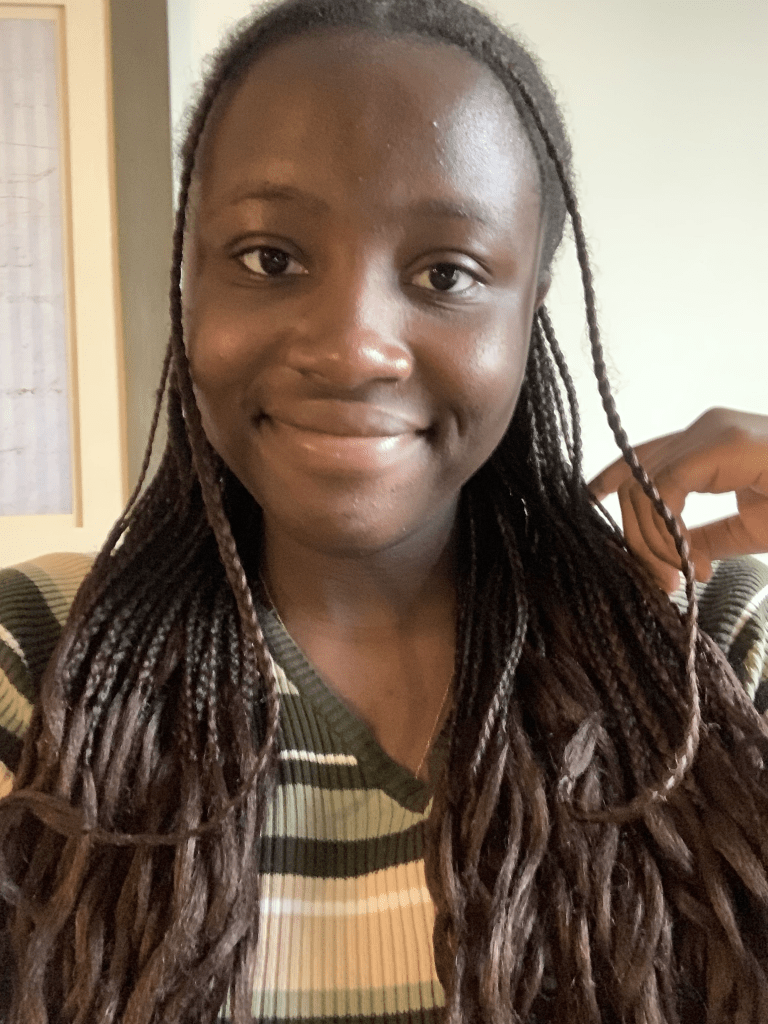
Hi! My name is Abieyuwa and I’m a grade 12 student from Alberta, Canada. I became interested in medicine – specifically pediatrics – at seven years old and have been actively pursuing that goal ever since! The reason why I’ve been so keen on becoming a physician for nearly a decade is because of the people aspect of it. Helping others has always been my main goal in life and I hope my future endeavors in medicine reflect that.


 Her Stem Space
Leave a reply to Teg Cancel reply