Black holes are among the universe’s most mysterious objects, with cosmic enigmas so dense that not even light can escape their pull. They’ve been present and captured so many imaginations in books and films like Interstellar. But what sounds like science fiction is grounded in one of physics’ most fascinating realities: time dilation.
To understand why time itself seems to warp around a black hole, we need to go back to revisit Albert Einstein’s General Theory of Relativity. Published in 1915, Einstein’s work revolutionised physics by showing that gravity is not just a force but the very warping of spacetime. Near massive objects, time ticks differently. This is known as gravitational time dilation. On Earth, we already experience a faint version of this effect. Atomic clocks placed at higher altitudes, and simply farther from Earth’s gravity, tick ever so slightly faster than clocks at sea level (Wikipedia). The difference is immensely microscopic, but measurable. In fact, GPS satellites must correct for time dilation constantly to provide accurate positioning on our phones (Ashby).
Now imagine a place where gravity is millions, even billions, of times stronger than Earth’s. That’s the realm that black holes live in. At the edge of a black hole, known as the event horizon, the pull of gravity is so extreme that time for an outside observer appears to stop. A spaceship approaching the event horizon would seem to “freeze” in time, its light stretched into red wavelengths until it fades from view. For the astronaut falling into the black hole, though, time feels completely normal; seconds pass as seconds. But for a distant observer watching from afar, those same seconds could stretch into years, centuries, or longer. Both experiences are in fact correct, because time is relative to the observer’s point in time. This dual nature has led physicists to call black holes “natural time machines.” While they may not let us revisit the past, they demonstrate how the future unfolds differently depending on where you stand in the universe.
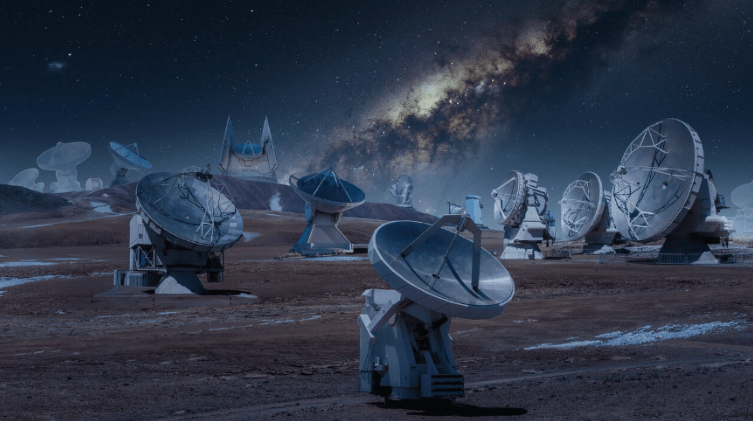
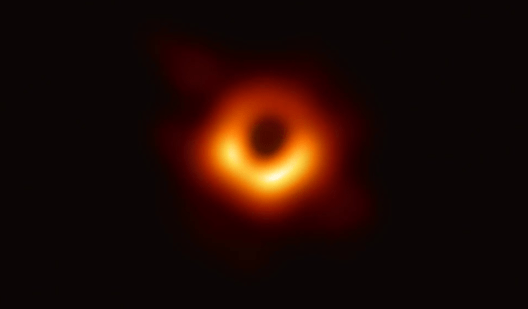
Scientists continue to study black holes not only to test Einstein’s predictions but also to push the boundaries of astrophysics. In 2019, the Event Horizon Telescope released the first-ever image of a black hole, showing proof that these cosmic giants are more than theoretical (Akiyama, Kazunori, et al). Future research could reveal how black holes influence galaxy formation, or whether they might hold the key to uniting general relativity with quantum mechanics. Culturally, black holes have become symbols of the unknowable. Writers, filmmakers, and artists use them as metaphors for mystery or infinite possibility. Yet their real story is even stranger: black holes show us that time is not a universal constant but a flexible fabric, stretched and pulled by gravity.
Works Cited
Ashby, Neil. “Relativity in the Global Positioning System.” Living Reviews in Relativity, vol. 6, no. 1, 28 Jan. 2003, http://www.ncbi.nlm.nih.gov/pmc/articles/PMC5253894/, https://doi.org/10.12942/lrr-2003-1.
Akiyama, Kazunori, et al. “First M87 Event Horizon Telescope Results. I. The Shadow of the Supermassive Black Hole.” The Astrophysical Journal, vol. 875, no. 1, 10 Apr. 2019, p. L1, pureportal.spbu.ru/en/publications/first-m87-event-horizon-telescope-results-i-the-shadow-of-the-sup, https://doi.org/10.3847/2041-8213/ab0ec7.
Wikipedia Contributors. “Hafele–Keating Experiment.” Wikipedia, Wikimedia Foundation, 13 May 2020, en.wikipedia.org/wiki/Hafele%E2%80%93Keating_experiment.
About the Author

Hi! My name is Sofiya, and I’m a rising senior in high school from Seattle, Washington. I’m passionate about physics and astrophysics, and my dream is to one day get my PhD in this field. I love dedicating my time to encouraging young women to pursue careers in STEM, and opening up more avenues for them as well!
 Her Stem Space
Leave a comment