By: Khushi Patel
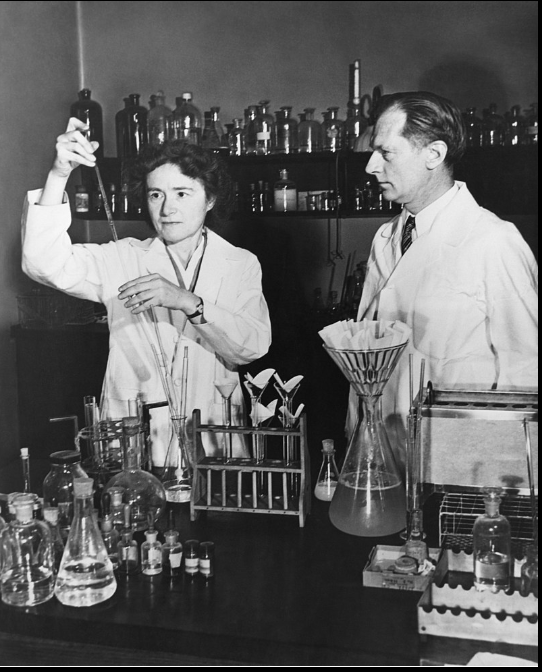
The first American woman to be awarded the Nobel Prize in Physiology, Gerty Cori, was the founder of how glycogen breaks down into glucose. Glucose is a simple sugar that is known as your body’s main energy source. As glycogen breaks down into glucose, each step is facilitated by specific enzymes that act as catalysts to speed up a process that would otherwise take decades. Born on August 15, 1896, in Czechoslovakia, Gerty Cori was a Bohemian-Austrian and American biochemist. Cori’s schooling initially began with homeschooling and later led her to the German University of Prague’s Medical School.
While in medical school, Gerty met Carl Ferdinand Cori, a fellow student who shared both her love of skiing and mountain climbing and her interest in laboratory research. In 1920, the two published the results of their first research collaboration, received their medical degrees, and married each other.
Gerty Cori was also responsible for the foundation of the Cori cycle through years of research. The basic idea of this process revolves around the idea of metabolism. During intense exercise or activity, your muscles work hard and don’t receive an adequate amount of energy. The muscles break down glucose to gain quick energy, and release Lactate, a byproduct. The lactate is then turned back into glucose in your liver, and the energy is reused by your muscles. Cori’s legacy still remains an important part of medicine. Her research helps doctors and scientists understand and develop modern treatments for life-threatening diseases such as diabetes, and is critical for understanding energy metabolism and glycogen storage.
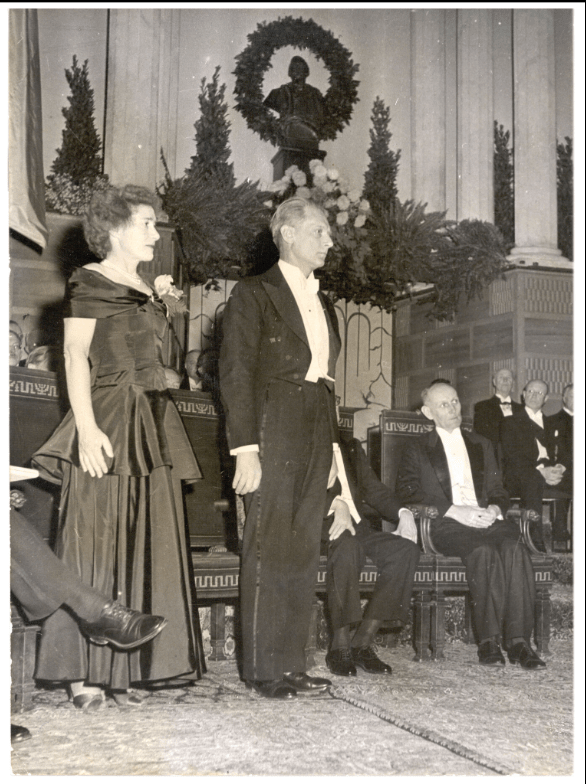
Lastly, in addition to the Nobel Prize in 1947, Gerty Cori was awarded many honors. In 1948, Gerty Cori received the St. Louis Award and the Garvan Medal of the American Chemical Society. In 1947, she was awarded the Squibb Award in endocrinology. Moreover, Cori was recognized as a Woman of Achievement in science by the Women’s National Press Club. President Truman also appointed Gerty Cori to two terms as a member of the board of the National Science Foundation. These awards and honors truly show how important the Cori cycle is and what weight it holds in the world of modern medicine.
Works Cited
- Dubinsky, Ellen. “Gerty T. Cori (1896–1957).” Legacy Exhibits, Bernard Becker Medical Library, Washington University School of Medicine, n.d. Accessed 8 Feb. 2026.
- Tahir, Sara et al. “Breaking Barriers: The Life and Legacy of Gerty Cori in Biochemical Research.” Cureus vol. 16,9 e69409. 14 Sep. 2024, doi:10.7759/cureus.69409
- “Gerty Cori – Facts.” NobelPrize.org, Nobel Prize Outreach, 2026, https://www.nobelprize.org/prizes/medicine/1947/cori-gt/facts/. Accessed 8 Feb. 2026.
- YOUNG FG. Gerty T. Cori. Br Med J. 1957 Nov 16;2(5054):1183-4. PMID: 13472084.
“Carl Ferdinand Cori and Gerty Theresa Cori.” Science History Institute, n.d., http://www.sciencehistory.org/education/scientific-biographies/carl-ferdinand-cori-and-gerty-theresa-cori. Accessed 8 Feb. 2026.
About the author
Helloo! My name is Khushi Patel, and I am a Sophomore in Highschool. I am really passionate about pursuing a career in medicine, specifically electrophysiology. This is because I want to help others and make a real change in the world!

 Her Stem Space
Leave a comment